
Exterior
Siding, trim, and soffits
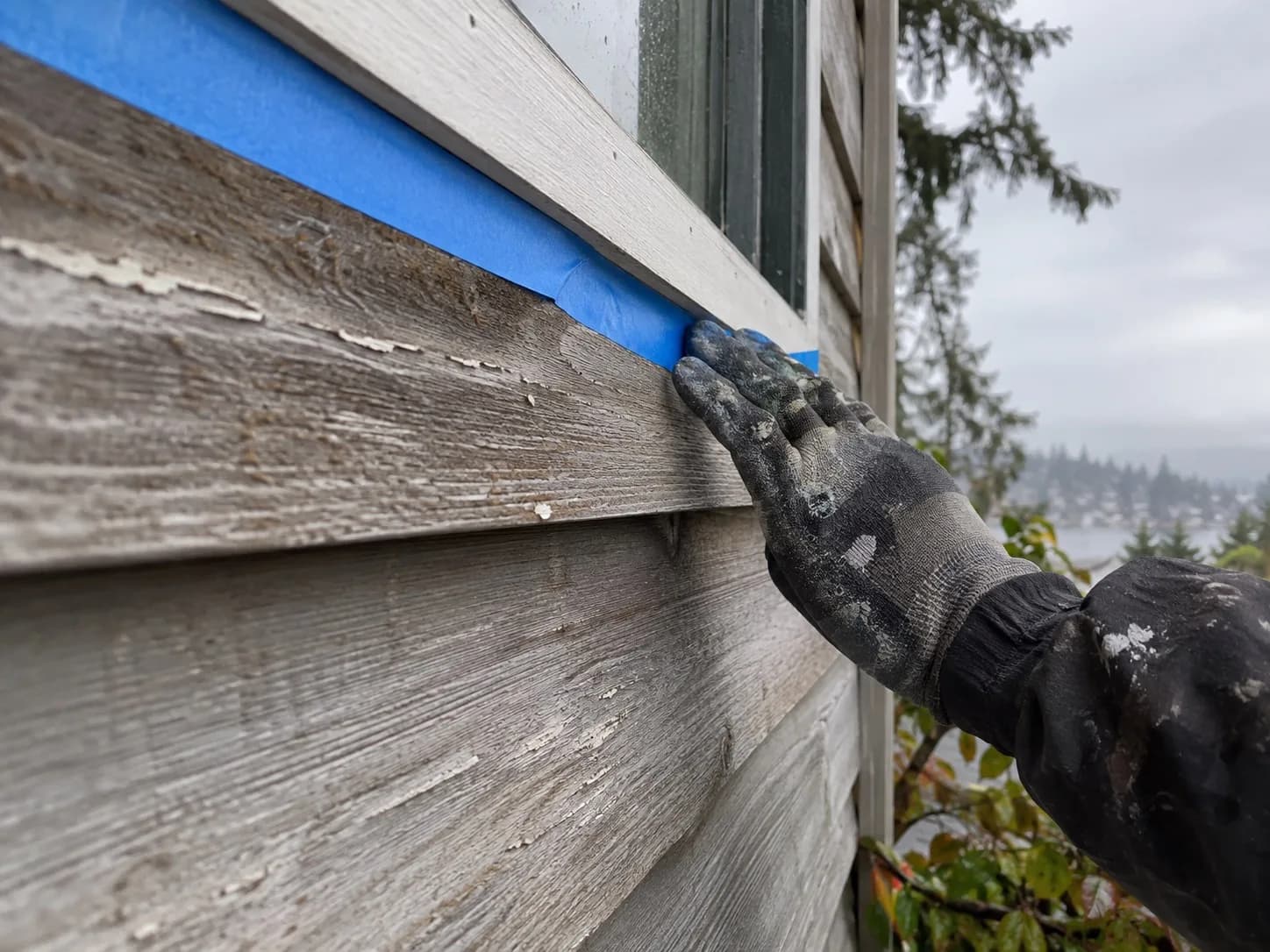
Washed, scraped back to a sound edge, feather-sanded, and primed the day bare wood is exposed.
See how prep worksBellevue, Kirkland, Redmond, Sammamish, Renton
Kitchen cabinets too. The scope is a written list of surfaces — the ones being painted and the ones being left alone — and it is what the work follows. The owner is on the job.
Each one is a different set of hours in a different order. What the hours go into is on the page, not hidden inside an adjective.
Washed, scraped back to a sound edge, feather-sanded, and primed the day bare wood is exposed.
See how prep works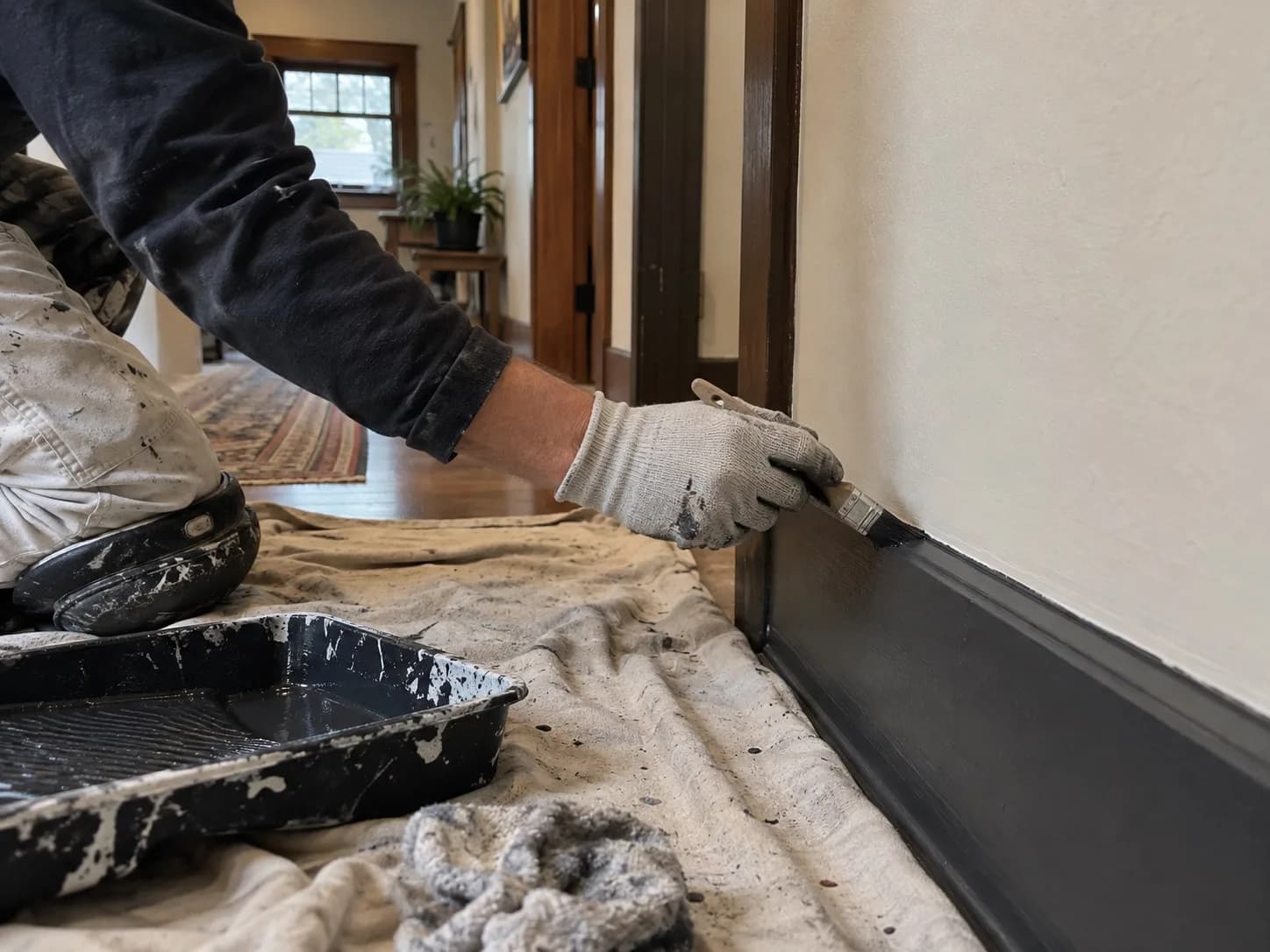
Floors covered, hardware off and bagged, nail holes filled and sanded flat before any colour.
See what a room day involves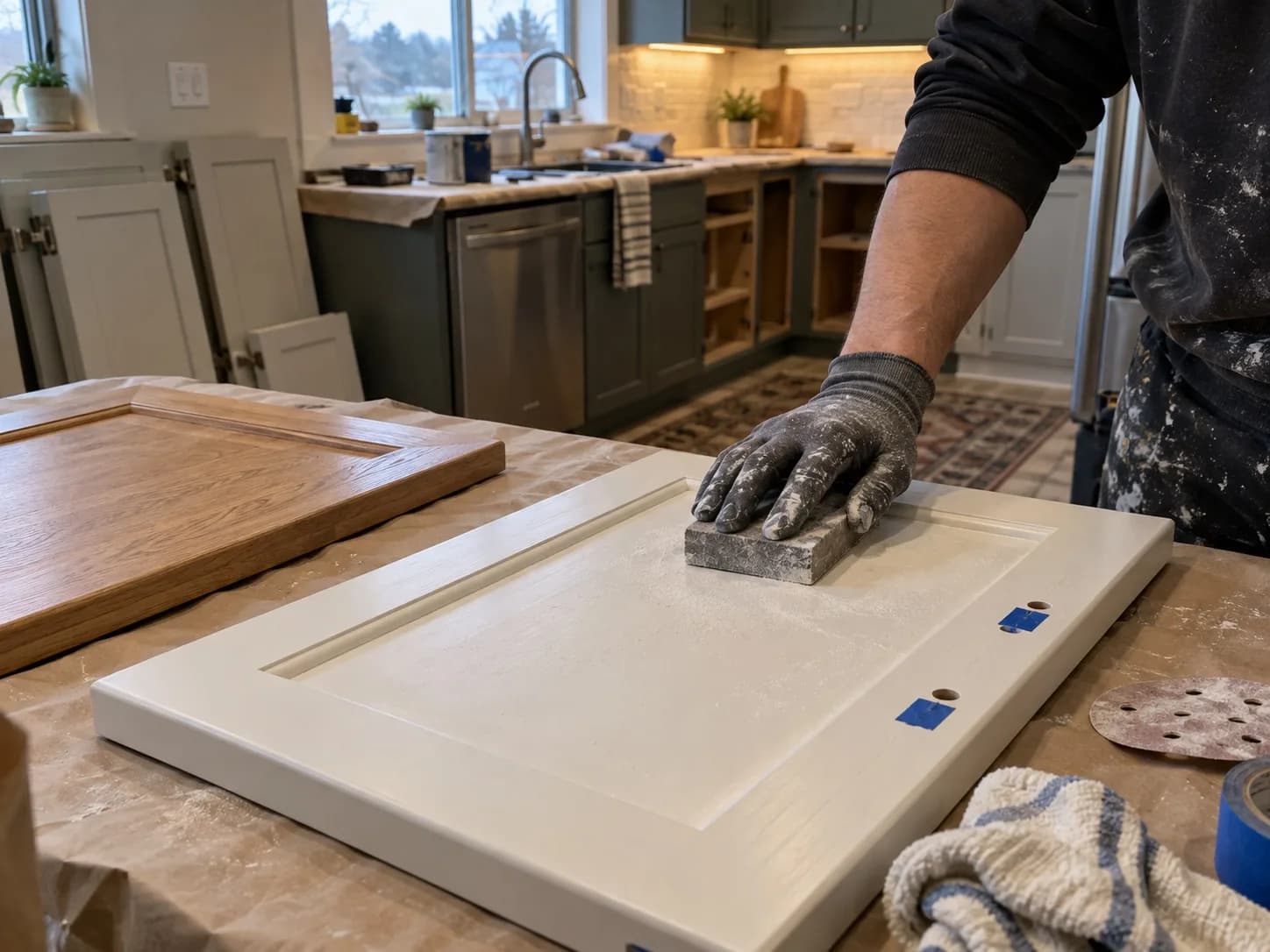
Doors come off and are labelled to their opening, degreased before sanding, then sprayed.
See how cabinets are handledThree stages. Each one names something you can check while standing there.
The scope is a list of surfaces named by location — the ones being painted, and on the same page the ones being left alone. Two lists on one document is what leaves nothing to argue about later.
Loose paint comes off to a sound edge and the scrape line is feather-sanded flat. Bare wood gets a moisture meter on it before primer, and under 12 percent is the reading that lets primer go on; above it, the wood is still drying.
Cut lines are brushed by hand where two colours meet. Drop cloths come up and the driveway is swept at the end of every working day, and the list written on the walk is what the finished house is read against, surface by surface.
Almost never the paint. The gap sits in the hours before the paint: how much scraping and sanding is planned, whether prep is its own line or folded into a square-foot figure, how many coats are named, and which surfaces made the list at all.
A scope that lists surfaces by name — north siding, garage trim, the two soffits over the deck — can be set beside another scope and compared line for line. A single number at the bottom of a page cannot be compared to anything, and it is the version that grows in the middle of the job.
No. Drizzle stops exterior work. It is a physical limit rather than a scheduling one, and it separates a coat that holds from one that fails on the north wall first.
A coating forms its film as water leaves it. The surface has to be dry going in, air and surface temperature have to stay inside the range printed on the can, and the surface has to sit at least 5°F above the dew point through the dry time, so condensation does not settle onto a film that has not closed yet.
On a wet day the work moves to what weather does not touch: interior rooms, cabinets, scraping and sanding under cover, masking, or setting up for the next dry window.
The owner is on the house, working. The walk through the house, the written scope, and the ladder belong to the same person, so a question about a surface goes to whoever decided about that surface — there is no estimator to relay it through.
Cleanup is a daily stage of the job, not a final one. At the end of each working day drop cloths come up, tools and debris leave the living space, and the driveway is swept. That is what keeps the house livable overnight rather than a job site parked in the middle of your week.
Bellevue, Kirkland, Redmond, Sammamish, and Renton. That is the whole list.
What comes back is a written list: surfaces named by location, the exclusions on the same page, prep on its own line, product and sheen per surface. Working in Bellevue, Kirkland, Redmond, Sammamish, and Renton.